Newborn · 5 min read · Updated 28 September 2026
Key points
- Mild jaundice is common in the first week and usually settles on its own.
- Jaundice in the first 24 hours of life is never normal — see a doctor urgently.
- Frequent feeding helps the baby clear bilirubin.
- Putting the baby in sunlight is not a safe or reliable treatment.
See a doctor now if you notice
- Yellow colour in the first 24 hours of life
- Yellow colour spreading to the tummy, arms or legs
- Baby is very sleepy or not feeding well
- Pale, chalky stools or dark yellow urine
- Jaundice lasting more than 2 weeks (3 weeks in premature babies)
Why do newborns get jaundice?
Jaundice is a yellow colour of the skin and eyes caused by bilirubin, a substance made when red blood cells break down. A newborn's liver is still maturing, so bilirubin can build up for a few days.
It usually appears on day 2 or 3, peaks around day 3 to 5 and fades within two weeks.
How is jaundice checked?
The doctor looks at how far the yellow colour has spread and may measure the bilirubin level with a skin meter or a small blood test. The safe limit depends on the baby's age in hours and whether they were born early.
When is phototherapy needed?
If bilirubin rises above the safe limit, the baby is treated with phototherapy — special blue light on the skin that helps the body clear bilirubin. Double-surface units light the baby from above and below for faster treatment. Most babies need a day or two.
What bilirubin level is normal?
There is no single normal number for every baby. The safe limit rises hour by hour over the first days of life, and it is lower for babies born early, babies with a low birth weight and babies with certain risk factors.
The doctor plots your baby's bilirubin on a chart for their exact age in hours and their weeks of pregnancy at birth. That tells us whether to simply watch, re-check, or start phototherapy. Ask us to explain where your baby's result sits on the chart.
When to worry about newborn jaundice
Most jaundice is mild. It needs a same-day doctor's check when it appears early, spreads, lasts long, or comes with a sleepy, poorly feeding baby.
- Yellow colour in the first 24 hours of life
- Yellow spreading below the chest to the tummy, arms or legs
- A baby who is very sleepy, floppy or not feeding well
- Pale, chalky stools or dark yellow urine
- Jaundice still present after 2 weeks (3 weeks if born early)
Questions parents ask
Should I stop breastfeeding if my baby has jaundice?
No. Keep breastfeeding often — at least 8 to 12 times a day. Feeding helps the baby pass bilirubin in stools.
Will sunlight cure jaundice?
No. Sunlight is not a reliable treatment and can cause sunburn or overheating. If jaundice needs treatment, it should be phototherapy under medical care.
How long does phototherapy take?
Most babies need phototherapy for about a day or two. The bilirubin is re-tested during treatment, and the lights are stopped once it has fallen to a safe level. Some babies need a re-check after stopping.
Can phototherapy be done at home?
Some hospitals offer home phototherapy for a few well babies with mild jaundice, but it still needs regular blood tests and close follow-up. For most babies who need treatment, phototherapy is safest in hospital, where bilirubin, temperature and feeding are checked throughout. The doctor will advise what is right for your baby.
How much does phototherapy cost per day?
It depends on how many days your baby needs, the tests required and whether any other care is needed. Please call or WhatsApp us for current charges before you come.
When should I worry about my baby's jaundice?
See a doctor the same day if the yellow colour appears in the first 24 hours, spreads to the tummy, arms or legs, or if your baby is very sleepy, not feeding well, or has pale stools or dark urine.
This guide is general health information for parents. It is not a diagnosis and does not replace a visit to your child's doctor. If you are worried, call us — we are open 24 hours for emergencies.
How we can help
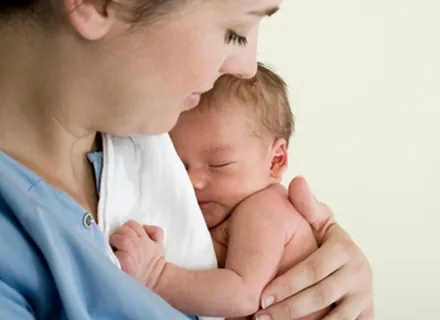
Level 2 NICU
Specialised neonatal intensive care with round-the-clock monitoring for our tiniest patients.

New Born Care
Gentle, expert care for newborns — from the very first breath and beyond.
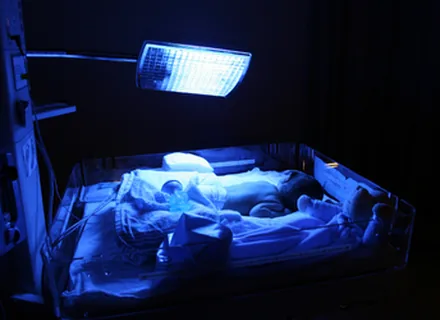
Phototherapy
Gentle phototherapy for newborns with jaundice, using advanced double-surface units.
Read next
Baby Weight Gain Chart by Month (WHO) — 0 to 2 Years
The WHO weight-for-age chart for boys and girls from birth to 2 years, what counts as a healthy range, how much weight babies lose after birth, and when slow weight gain needs a doctor.
Read the guideNewborn · 6 min readPremature Baby Care at Home: Feeding, Weight Gain & Warning Signs
How to care for a premature baby after the NICU — feeding, kangaroo care, weight gain and corrected age, vaccines, follow-up eye and hearing checks, and the warning signs to act on.
Read the guide